
Perspektif
How to Build a Cold Storage Room? Project Planning, Panels, and Cooling Systems
September 21, 2026
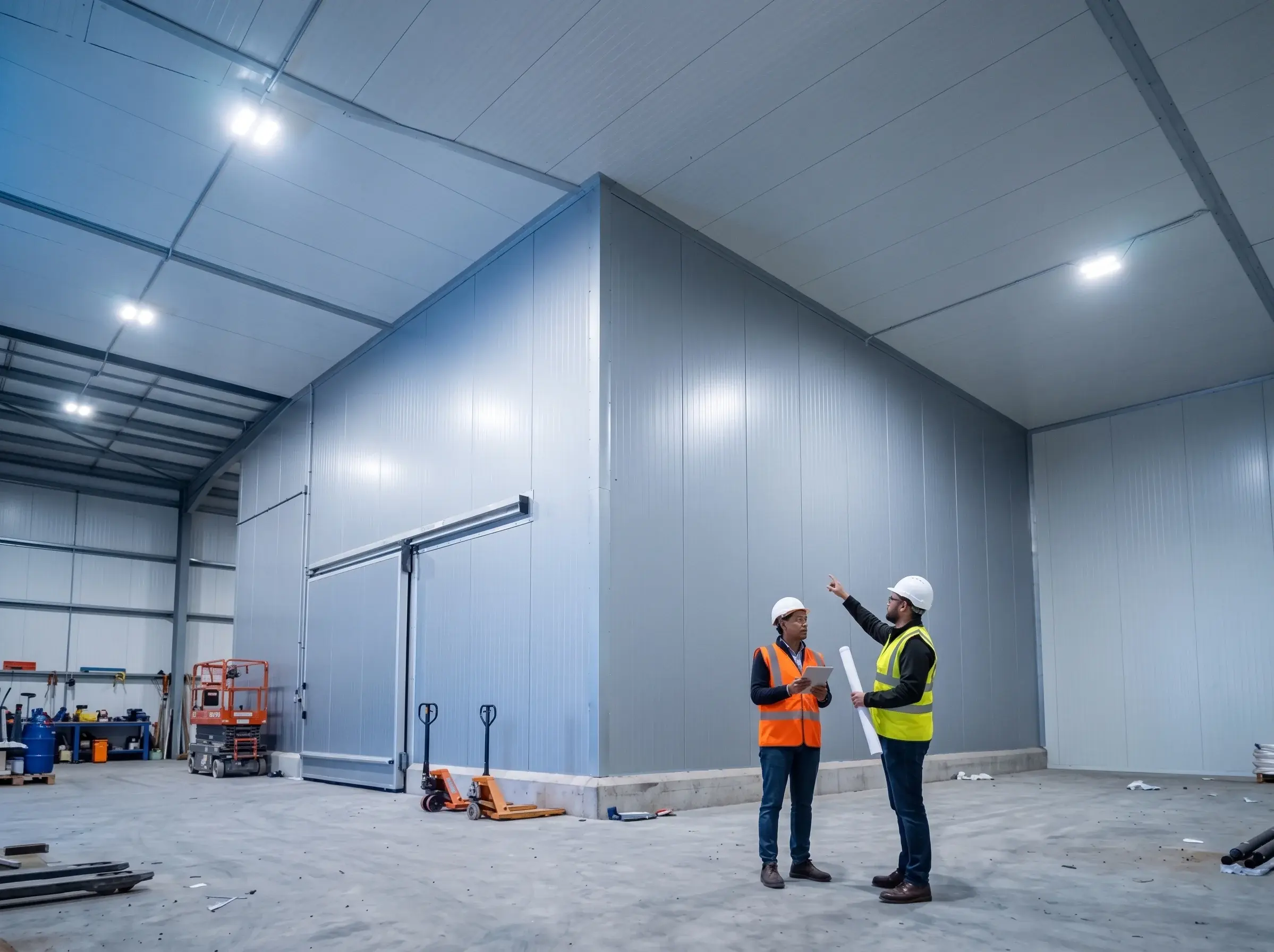
Learn how to build an efficient cold storage room. From project planning and choosing the right insulation panels to selecting the perfect cooling system, read our comprehensive guide.
In sensitive sectors such as food, pharmaceuticals, and chemicals, preserving the freshness and form of products is vital. Cold storage rooms are critical investments that extend product shelf life. But how do you build a cold storage room that is durable, efficient, and energy-saving? A successful cold room installation relies on proper project planning, high-quality insulation (panels), and the integration of tailored cooling systems.
Here is a step-by-step guide to building a cold storage room:
1. Project Planning and Needs Analysis
The foundation of building a cold room is accurate planning. Installation without a proper project leads to high energy costs and product losses in the future. The following should be addressed:
What is the Product? Meat, fruits, vegetables, or vaccines... Each product requires specific storage temperatures and humidity levels.
What is the Capacity? The daily entry-exit tonnage and the total volume of the warehouse must be calculated.
Location and Climate: The ambient outside temperature of the region directly affects the cooling load calculations.
2. Perfect Insulation with Cold Room Panels
The cold air produced by the cooling system must stay inside, and the outside heat must be kept out. This is achieved using cold room panels.
Polyurethane Core: The best material for insulation is polyurethane (typically 42 kg/m³ density), which has a very low thermal conductivity coefficient.
Panel Thickness: Depending on the room temperature (Cool, Cold, Frozen, or Blast Freezing), panel thicknesses ranging from 50 mm to 200 mm are selected.
Surface and Interlocking System: Flat panels for hygiene standards or corrugated panels for durability can be chosen. Interlocking systems completely eliminate thermal bridges.
3. Selection and Installation of Cooling Systems
The heart of the cold room is the cooling system. Comprising a compressor, condenser, and evaporator, this system must be selected based on the cooling load calculated during the planning phase.
Evaporator (Indoor Unit): Cools the air inside the room. It should have an appropriate airflow capacity so as not to dry out the products.
Condenser (Outdoor Unit): Expels the heat absorbed from the inside to the outside. It must be resistant to outdoor conditions.
Energy Efficiency: Devices with inverter technology and smart automation systems significantly reduce energy consumption.
Conclusion
A successful cold storage room is more than just four walls and an air conditioner. It is the perfect combination of detailed engineering, high-quality cold room panels, and accurately selected cooling systems. Contact our expert team today for long-lasting, energy-efficient cold room solutions tailored to your needs.
CPR Trading
Let our expertise support your project
Contact our team to discuss your technical needs and project-specific solutions.